Unlock Creative Potential with Abcd Ref Regular Typeface
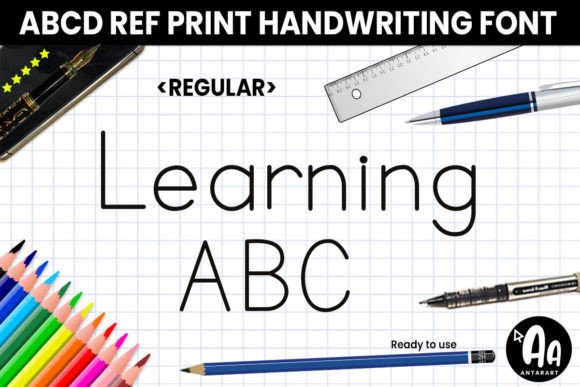
If you've ever struggled to find a font that feels both approachable and professional, you're not alone. Whether you're designing a logo for a new brand, creating educational materials, or putting together social media posts that actually connect, the typeface you choose quietly shapes how people perceive your work. That's where Abcd Ref Regular steps in—a display font grounded in the D'Nealian Method, originally developed for US school curricula. It carries a familiar, friendly quality without sacrificing clarity, making it surprisingly versatile for a wide range of creative and commercial projects.
What makes this font stand out isn't just its educational roots. It's the way those roots translate into practical design value. The letterforms are clean, consistent, and easy to read at various sizes. There's a natural rhythm to the characters that mimics how people actually write by hand, which gives your layouts an organic, human touch. For designers, marketers, and small business owners who want their visual communication to feel genuine rather than sterile, that subtle warmth matters more than you might expect.
A Font Built on Familiarity and Function
The D'Nealian Method has been a staple in American classrooms for decades, teaching children how to transition from print to cursive handwriting. Abcd Ref Regular draws directly from that pedagogical tradition, which means the letter shapes already feel intuitive to millions of people. You're not asking your audience to decode an unfamiliar typeface—you're meeting them halfway with something their eyes recognize instantly.
This familiarity has real implications for brand identity and visual consistency. When you use a typeface that people subconsciously associate with learning, clarity, and approachability, you're building trust before they've even read a single word of your copy. Think about children's book publishers, tutoring services, stationery brands, or family-oriented businesses. The font does some of the emotional heavy lifting for you.
But don't mistake approachable for amateurish. The clean geometry and balanced proportions of this display font make it suitable for polished, professional presentation across both print and digital formats. It holds up well in editorial design, on product packaging, and in web design contexts where readability at smaller sizes is essential.
Practical Applications Across Industries
One of the strengths of Abcd Ref Regular is how naturally it adapts to different project types. Here are some real-world scenarios where this typeface earns its place in your design toolkit:
- Logo design for brands that want to project warmth and accessibility—think childcare centers, educational apps, or organic food companies targeting families.
- Packaging design where legibility on shelf displays matters, especially for products aimed at parents, children, or health-conscious consumers.
- Social media graphics that need to stand out in crowded feeds without looking overly formal or corporate.
- Invitations and event materials for school fundraisers, community events, or casual celebrations where a handwritten feel adds charm.
- Digital products like printable worksheets, planners, and educational resources—areas where the font's D'Nealian heritage genuinely shines.
- Blog headers and website typography for lifestyle, parenting, or education-focused content creators who want their sites to feel welcoming.
- Marketing assets including flyers, brochures, and email headers that need to communicate quickly and clearly.
- Merchandise such as tote bags, mugs, and t-shirts where a creative font with personality can drive sales.
The font also works beautifully in poster design and editorial layouts where you need a display typeface that doesn't overwhelm accompanying imagery or body text. Its moderate weight and even spacing give designers room to play with hierarchy without creating visual chaos.
Pairing and Readability: Getting the Most from Your Typography
No font exists in isolation. The real magic happens when you pair Abcd Ref Regular with complementary typefaces that balance its personality. Because it leans toward a friendly, slightly informal aesthetic, it pairs well with clean sans serif fonts for body text. Think of something like a geometric sans for your paragraphs—this creates contrast while maintaining readability across long-form content like blog posts or product descriptions.
If your project calls for more sophistication, consider pairing it with a classic serif font for headlines or pull quotes. The interplay between the educational warmth of Abcd Ref Regular and the editorial authority of a serif creates visual tension that keeps readers engaged.
A few practical tips for font pairing:
- Limit yourself to two or three typefaces per project. More than that and your design starts to feel scattered.
- Establish clear hierarchy. Use Abcd Ref Regular for headlines or accent text where its personality can shine, and let a more neutral font handle the heavy lifting of body copy.
- Test at multiple sizes. A font that looks great at 48 pixels might lose its charm at 14. Check how your pairings perform across different contexts—mobile screens, printed flyers, large-format posters.
- Consider your audience's context. If they're reading on small screens, prioritize readability over stylistic flair. If they're holding a printed invitation, you have more room to lean into the font's character.
Remember that modern typography isn't about following rigid rules—it's about making intentional choices that serve your project's goals. The best font pairing is the one that communicates your message clearly while reinforcing the emotional tone you're after.
Licensing and Long-Term Value
Before committing any premium font to a commercial project, always review the licensing terms. Abcd Ref Regular comes with specific usage rights that determine how you can apply it across your design assets. Whether you're creating materials for a client, selling digital products, or building your own brand, understanding the license protects you legally and ensures you're using the typeface as intended.
For small business owners and freelancers, investing in a well-crafted commercial font often pays for itself quickly. A distinctive typeface becomes part of your brand's visual DNA—it shows up on your website, your invoices, your social posts, and your packaging. Over time, that consistency builds brand recognition in ways that generic free fonts simply cannot replicate.
If you're building a library of design assets for ongoing projects, take time to explore the full range of styles included with the font family. Some typefaces offer multiple weights, alternates, or stylistic variations that expand your creative options significantly. Even if you start with the regular weight, knowing what else is available helps you plan future design work more strategically.
Why Thoughtful Font Selection Matters More Than Ever
In a landscape saturated with content, the details separate memorable brands from forgettable ones. Your typography is one of those details—often overlooked, but deeply influential. A font like Abcd Ref Regular gives you a tool that bridges education and design, simplicity and sophistication. It doesn't try to be everything, and that's precisely what makes it effective.
Whether you're a content creator designing printable resources, a brand strategist developing a visual identity for a family-focused startup, or a hobbyist crafting handmade invitations, choosing the right typeface is an investment in how your work is received. Take the time to experiment, test your pairings in context, and trust your instincts. The best design decisions come from understanding your audience—and choosing tools that speak their language.