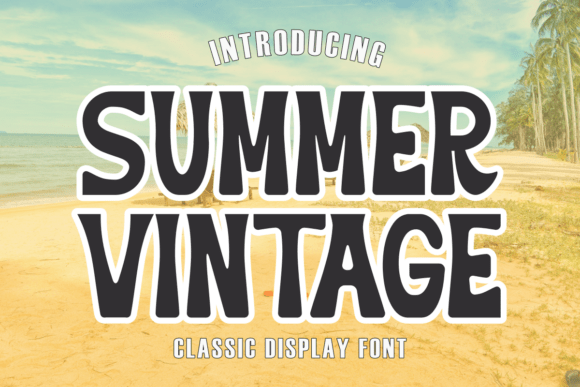
Summer Vintage: Capturing Sun-Drenched Nostalgia in Your Designs
There’s a specific feeling that hits when you spot a faded surf shop sign from the 1970s or a sun-bleached postcard at a flea market. It’s a mix of warmth, relaxation, and instant nostalgia. If you are a designer or entrepreneur trying to bottle that lightning for a modern audience, typography is usually your first hurdle. You need a typeface that feels retro without looking outdated, and playful without sacrificing legibility. This is exactly where a classic display font like Summer Vintage enters the picture. Inspired by the golden era of beach culture and sunny vacations, this typeface offers bold, playful curves that evoke the carefree spirit of endless summer days.
But we aren't just talking about a "pretty" font. In the world of branding and visual communication, the typeface you choose carries the weight of your message. If you are designing a logo for a new coastal cafe, creating graphics for a travel blog, or launching a line of sublimation products, the visual language needs to align with the experience you are selling. Summer Vintage isn't just a collection of letters; it is a design asset that brings a specific vibe to the table. It bridges the gap between mid-century modern aesthetics and contemporary boldness, making it a versatile tool for a wide range of creative applications.
The Visual Language of Retro Warmth
What makes a display font like Summer Vintage so visually appealing? It comes down to the silhouette. Unlike rigid sans serif fonts or the formal structure of traditional serifs, this style relies on rounded edges and substantial weight. It feels substantial on the page or screen. The curves suggest movement and fluidity, mimicking the rolling waves or the roundness of vintage souvenir typography. There is a tactile quality to it; it looks like it could be embossed on a leather notebook or screen-printed on a cotton t-shirt.
For designers, this aesthetic is invaluable because it instantly communicates "lifestyle." When you pair this typeface with a muted color palette—think soft teals, sandy beiges, and faded corals—you create an immediate sense of place. It works beautifully as a standalone hero element in posters or headers. However, it also shines when used to provide contrast against cleaner elements. If you are working on a web design project, using this font for H1 headers can break the monotony of standard web-safe fonts, giving the site a distinct personality that encourages users to stay and explore.
Practical Applications for Modern Creators
The versatility of a well-crafted creative font lies in its ability to adapt to different mediums. You might be a small business owner looking to rebrand, or a hobbyist working on scrapbooking projects. The utility of a font like this spans both the digital and physical realms.
For those in the merchandise space, particularly in the booming print-on-demand industry, typography is the design. Summer Vintage is perfectly suited for sublimation products and retro t-shirt designs. Because the letterforms are bold, they maintain their integrity even when printed on textured fabrics. It is also an excellent choice for greeting cards and invitations, especially for summer weddings, pool parties, or luau-themed events. The font does the heavy lifting of setting the mood, reducing the need for excessive illustration.
Furthermore, consider the impact on packaging design. If you are selling artisanal candles, handmade soaps, or gourmet snacks with a tropical twist, the label is your first handshake with the customer. A serif font might feel too stiff, and a standard sans serif might feel too sterile. A bold, nostalgic display typeface suggests that the product inside is crafted with care and personality. It signals a "small batch" or "boutique" quality that consumers love.
Strategic Branding and Visual Consistency
From a brand strategy perspective, consistency is king. Using a distinctive typeface like Summer Vintage across your marketing assets helps build brand recognition. When your Instagram graphics, your website headers, and your physical signage all share the same typographic DNA, you create a cohesive brand identity.
However, a word of caution is necessary here: readability considerations. As a display font, Summer Vintage is designed for impact, not for body copy. You wouldn't want to write a 500-word blog post or a product description in this style. The bold, playful curves that make it great for headlines can become tiring to read in long paragraphs. This is where font pairing becomes critical. To maintain a professional presentation, pair this display font with a clean, neutral sans serif or a simple serif for the body text. For example, a geometric sans serif can ground the whimsical nature of the vintage font, ensuring your message is understood while the vibe is preserved.
This approach improves audience engagement. If your graphics look chaotic or hard to read, users scroll past. But if you use the display font to grab attention and a legible font to deliver the information, you create a hierarchy that guides the reader's eye naturally.
Navigating Font Selection and Licensing
If you are ready to integrate this style into your workflow, there are a few practical steps to ensure success. First, always review included font styles. Does the typeface come with different weights? Does it include alternates or ligatures? Having access to variations allows you to fine-tune the look. For instance, a swash alternate on a capital letter can add a touch of elegance to an invitation, while a standard weight might be better for a bold t-shirt graphic.
Second, you must understand commercial licensing considerations. If you are a designer creating assets for a client, or a business owner selling products, you need a license that covers commercial use. Free fonts found online often come with vague licensing that can lead to legal headaches down the road. Investing in a premium font ensures that you have the legal right to use the typeface in your logo design, on merchandise, and in digital products without fear of infringement. It is a small cost for peace of mind and professional security.
Finally, test your font pairings before finalizing a design. Place your header text in Summer Vintage and your sub-header in a complementary style. Does the contrast work? Does the vintage font overpower the message, or does it enhance it? Sometimes, simply adjusting the letter spacing (tracking) can make a display font feel more modern and airy, fitting better with contemporary editorial layouts or minimalist web design.
Ultimately, the goal of any design asset is to solve a problem and evoke an emotion. Whether you are designing for a client’s new beach bar or creating a digital planner for travelers, the tools you choose define the outcome. A typeface like Summer Vintage offers a direct line to a specific emotional response—happiness, relaxation, and nostalgia. By using it strategically, pairing it wisely, and applying it to the right projects, you can turn a simple design into a memorable experience that resonates with your audience. It’s about bringing that fun and sunshine into the daily grind of creative work, one letter at a time.