Lotrance: A Medieval Display Font for Epic Branding
There’s a moment in every designer’s search for the perfect typeface when a project demands more than just legibility—it demands atmosphere. You’re not just laying out letters; you’re building a world. Maybe it’s for the title of a fantasy novel, the logo of a craft brewery with a medieval theme, or the interface of a mobile game where players build kingdoms. In these cases, a standard sans serif won’t cut it. You need a font that feels like it was forged in a blacksmith’s fire, etched into stone, or carried on a banner into battle. This is where a typeface like Lotrance enters the scene, not as a mere tool, but as a storytelling device.
The Character Behind the Craft: What Makes Lotrance Visually Distinct
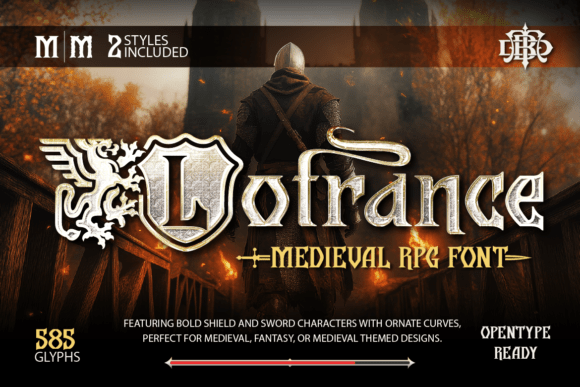
Lotrance is a premium display font, but its identity is rooted in a specific historical and fantastical aesthetic. It’s a bold medieval serif typeface, immediately evoking the world of knights, castles, and chivalric orders. Its visual appeal isn’t just about being old-fashioned; it’s a deliberate design choice. Each character features the strong, structured lines of a shield, with subtle ornamental details that might remind you of sword hilts or the intricate metalwork of a suit of armor. The curves are elegant yet powerful, avoiding the rustic roughness of some blackletter fonts in favor of a more refined, heroic look. This balance is key—it feels ancient and authoritative without sacrificing clarity, making it a versatile creative font for modern applications.
Understanding its visual personality helps in making practical design decisions. Lotrance isn’t a workhorse body text font; it’s a headline hero. Its detailed design shines at larger sizes, where the shield-style letterforms and subtle ornaments can be fully appreciated. This makes it an ideal typeface for titles, logos, and branding elements where you want to make a strong, immediate impression. Think of it as the visual equivalent of a booming narrator’s voice in a movie trailer—it sets the tone instantly.
From Fantasy Games to Artisan Branding: Practical Applications
The true value of a distinctive font like Lotrance is measured in its real-world utility. For graphic designers, entrepreneurs, and content creators, it’s a design asset that can solve specific visual communication challenges. Its medieval theme makes it a natural fit for certain niches, but its application can be broader and more creative than you might first assume.
- Gaming & Entertainment: This is its home turf. Use Lotrance for game titles, logo design for RPGs, UI/UX elements in fantasy-themed apps, movie posters for epic adventures, and merchandise like t-shirts or posters. It instantly communicates genre and builds anticipation.
- Branding & Packaging: Imagine a craft meadery, a blacksmith’s workshop, a board game company, or a fantasy-themed subscription box. Lotrance becomes the cornerstone of their brand identity, used on logos, labels, packaging, and business cards to create a cohesive and immersive customer experience.
- Editorial & Digital Design: For bloggers, podcasters, or YouTubers covering fantasy literature, history, or gaming, Lotrance can be used for blog post headers, podcast cover art, video thumbnails, and social media graphics. It helps establish a recognizable visual style that attracts a like-minded audience.
- Events & Invitations: Designing invitations for a themed wedding, a LARP (Live Action Role-Playing) event, a Renaissance fair, or a fantasy book club meeting? Lotrance sets the perfect mood from the first glance, promising an immersive experience.
Integrating a Thematic Font into Your Design Workflow
Choosing a bold, themed display font is only the first step. Using it effectively requires a thoughtful approach to typography and design principles. Here’s how to make Lotrance work for you, not against you.
Font Pairing is Crucial. A font with this much personality needs a supporting cast. Avoid pairing it with another highly decorative font. Instead, contrast it with a clean, simple sans serif or a neutral serif. For body text on a website or in a brochure, a font like Open Sans, Lato, or a classic serif like Garamond will provide excellent readability without competing for attention. The key is hierarchy: Lotrance commands the eye for headlines, while the paired font handles the detailed information.
Test for Readability in Context. Always view your design at the intended size and medium. A font that looks majestic on a 27-inch monitor might become illegible when shrunk for a mobile app icon or a small social media graphic. Use Lotrance where its details can be seen—large banners, title cards, and prominent logos. For smaller text, switch to your paired, more legible font.
Review the Included Font Styles. Many premium fonts come with multiple weights or styles (like Regular, Bold, or even a slightly different ornamented version). Check what’s included in the license. Using a bold weight for a main title and the regular weight for a subtitle can create subtle, professional variation within your thematic design.
Understand the Licensing. This is a non-negotiable step for any commercial project. Whether you’re designing a client’s logo, selling merchandise, or creating a digital product for sale, you must ensure you have the correct commercial license for the font. Read the license agreement carefully—it will specify what is and isn’t allowed, such as use in apps, on websites, or for print-on-demand products. Using a font without the proper license is a serious legal and financial risk.
Beyond Medieval: Finding the Right Fit for Your Project’s Soul
While Lotrance is inspired by a specific era, its core function is to evoke strength, tradition, and narrative depth. A designer might use it for a modern security company’s branding to imply protection and reliability, or for a high-end whiskey label to suggest heritage and craftsmanship. The goal isn’t always historical accuracy; it’s about tapping into the emotional associations of the visual style.
Before committing, ask yourself: Does this font’s personality align with the core message of my project? If your brand is about cutting-edge minimalism, Lotrance might clash. But if your project values legacy, adventure, craftsmanship, or epic storytelling, it could be the missing piece that transforms a good design into a memorable one. In the vast landscape of modern typography, having a tool like this in your arsenal allows you to speak a visual language that resonates on a deeper, more visceral level. It’s not just about letters; it’s about the worlds they help create.