Darcy Font: Adorable Animal Illustrations for Creative Projects
Imagine a font that does more than just spell words—it tells a story. For anyone working on designs aimed at children, families, or playful brands, finding typography that is both legible and bursting with personality can be a challenge. You need something that captures attention instantly, conveys warmth, and stands out in a crowded visual space. Enter Darcy, a premium novelty alphabet font that transforms standard uppercase letters into charming miniature worlds, making it a standout design asset for a wide range of creative applications.
A Fresh Take on Display Typography
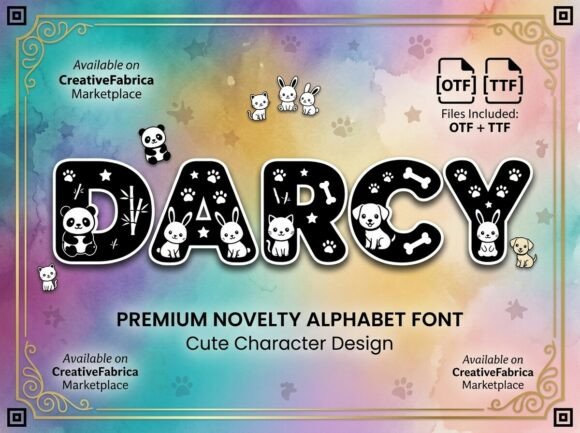
Darcy breaks away from the flat, uniform characters that dominate most font libraries. Each letter is ultra-chunky and rounded, designed as a solid black frame that is hollowed out to showcase adorable cartoon animals and icons. Think of baby pandas munching on bamboo, fluffy bunnies, smiling kittens, happy puppies, scattered paw prints, dog bones, and twinkling stars—each nestled comfortably inside a thick, bold letterform. This approach turns every word into a delightful visual puzzle, perfect for grabbing the attention of young readers or anyone who appreciates a touch of whimsy.
The font’s engineering is thoughtful. Smooth, thick perimeter contours ensure each character feels soft and approachable, while a clean white drop-shadow line adds depth and clarity. This combination guarantees that despite the intricate illustrations within, the letters remain highly legible. For projects where readability is non-negotiable—like classroom materials or product labels—this balance is crucial. It’s a display font that doesn’t sacrifice function for fun.
Practical Applications That Shine
So where does a font like Darcy fit into your creative workflow? Its versatility might surprise you. While it’s an obvious choice for children’s book covers or nursery wall art, its applications extend far beyond the obvious.
Branding and Logo Design: If you’re crafting a brand identity for a pet shop, a children’s boutique, a daycare center, or a family-friendly bakery, Darcy can serve as the playful centerpiece of your logo. It immediately communicates a sense of joy and care, helping your brand stand out in a market where visual appeal is everything. Pair it with a clean sans-serif font for body text to maintain professionalism while letting the personality of Darcy shine through in headlines.
Packaging and Product Labels: Imagine this font on the packaging of a sweet shop, a kids’ snack brand, or a line of pet treats. The illustrated letters become part of the product’s story, making the packaging itself a memorable part of the customer experience. It’s a powerful tool for creating shelf appeal that resonates with both children and the adults making the purchase.
Invitations and Event Decor: From birthday party invitations to baby shower banners, Darcy adds an instant dose of celebration. Its chunky, illustrated letters are perfect for creating eye-catching headlines that set the tone for a fun, festive event. For crafters using Cricut or Silhouette machines, the font’s clear contours make it ideal for cutting vinyl stickers, decals, and custom decor.
Digital Presence: Don’t limit this font to print. It can bring life to social media graphics, especially for posts promoting family-oriented events, pet adoption drives, or children’s products. On a website or blog, it can be used sparingly for section headers or promotional banners to inject personality without overwhelming the reader. The key is strategic use—let Darcy be the star of the show in headlines, but rely on more neutral fonts for longer paragraphs of text.
Integrating Darcy into Your Design Strategy
Using a novelty font effectively requires a bit of strategy. It’s not a workhorse for body copy; its strength lies in making a bold statement. Here’s how to integrate it seamlessly into your projects.
Font Pairing is Key: Darcy’s playful, detailed nature means it pairs best with simple, clean typefaces. A classic serif font like Georgia or a modern sans-serif like Montserrat can provide a sophisticated contrast, ensuring your overall design remains balanced and readable. This pairing approach is a cornerstone of professional typography, allowing a creative font to shine without causing visual chaos.
Mind the Context: Always consider your audience and medium. A poster for a kindergarten classroom can embrace Darcy’s full whimsy, while a corporate brochure for a veterinary clinic might use it more selectively—perhaps only for a logo or a special callout box. The goal is to enhance communication, not distract from it.
Test for Readability: Before finalizing any design, test it at the intended size and in the intended environment. Will the intricate details inside the letters be clear on a small social media thumbnail? Will they print crisply on a textured paper stock? A quick mock-up can save you from costly revisions later.
Review Licensing: As with any premium font, ensure you understand the licensing terms. If you plan to use Darcy in commercial projects—like merchandise, client work, or product packaging—verify that the license covers your intended use. This is a standard but critical step in any professional design workflow.
Elevating Your Creative Toolkit
Ultimately, a font like Darcy is more than just a set of letters; it’s a design asset that injects emotion and narrative into your work. It helps build visual consistency for brands that want to appear friendly and approachable. It boosts audience engagement because people naturally linger on designs that surprise and delight them. And it enhances professional presentation by showing that you’ve paid thoughtful attention to every detail of your visual communication.
In a world saturated with generic typography, choosing a distinctive, high-quality typeface can be the detail that sets your project apart. Whether you’re a small business owner designing your own marketing materials, a crafter creating custom gifts, or a designer working on a client’s brand identity, having a font like Darcy in your toolkit opens up new possibilities for creativity. It reminds us that design, at its best, is not just about conveying information—it’s about creating an experience. And sometimes, that experience is best served with a side of pandas, puppies, and pure, unadulterated cuteness.